
Marketing has never been this efficient. In the past decade, we got more data than we can use. Better tools than we can master. And now AI, which writes, tests, and personalizes creative and copy faster than any team ever could. Cost per click went down. Conversion rates went up. The dashboards have never looked better.
So the board must be impressed by now. Right?
Not really. Marketing is still the first budget to be cut. Still treated as a cost. Still struggling to explain what it adds to revenue, margin, and growth.
That’s the paradox. Marketing became more efficient, but not more valuable. Because efficiency answers one question: how do we run better campaigns? The board asks another: which investment delivers the most value?
As long as marketing keeps answering the first question, the board will keep asking the second. Here’s how to make the switch.
1. You Can Run the Wrong Campaign Very Efficiently
Marketers are good at optimizing. Really good. Give us a campaign, and we’ll improve it. Optimization improves what is already there. It never questions whether it should be there. That’s how you end up running the wrong campaign very efficiently.
Take a recruitment agency for freelance carpenters and construction workers, with more than 40 offices. Marketing’s job: generate more leads. More applicants, more placements. Makes sense.
Except the data showed there were already enough applicants. The problem was placing them. 18% of candidates were rejected for one simple reason: the recruiter couldn’t reach them. Carpenters work on site during the day. They don’t pick up. Recruiters gave up after two tries.
So what would a better lead campaign have done? Lower cost per lead, higher conversion, a great dashboard. And even more candidates nobody could reach.
The fix wasn’t a campaign. It was an automation flow that contacted candidates several times, also in the evening, and let them pick a time to be called. The goal changed from more leads to more placements. Every euro invested returned €6.20.
Now add AI. AI makes optimization faster, cheaper and endless. More variants, more tests, more personalization. But AI optimizes whatever you point it at. What used to be a constraint is gone now.
But without clarity on customer value, AI accelerates noise. With it, AI accelerates impact. For years, efficiency felt like the problem, because testing was slow and expensive. It never was. The problem was effectiveness. Not doing things right, but doing the right things. We just hardly ever got there. So if the value isn’t in optimizing campaigns, it’s in deciding which investment comes first.
2. Better Priorities Beat Better Campaigns
Here’s what optimization gets you. A few percentage points. A better open rate. A cheaper click. Nice. But no revenue uplift.
Now look at what prioritizing gets you.
Across our business cases, every case followed the same method, used real company data, and took the same three months. Yet the returns ranged from about 1 euro to more than 40 euros for every euro invested. Same method, same effort. The difference was which problem the team decided to solve first.
The funnel tells the same story. Business cases in the middle of the funnel returned 21.7 euros for every euro invested. At the top of the funnel: 6.7 euros. More than three times the return, just by investing in the right place.
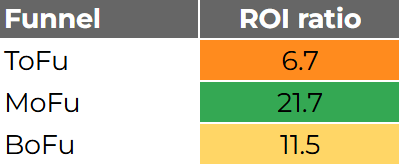
Business case returns per funnel stage: euros returned for every euro invested. Source: MartechTribe business cases, Beeckestijn Business School.
No campaign optimization closes a gap like that on its own. A better subject line can help, but only when it’s tied to a data point that proves revenue uplift. Done blindly, it just gets you a better open rate.
Take a global dairy producer. Innovation was the strategy, so marketing was asked to launch a new product with caterers. A classic launch: free samples, a discount on the second order.
The result?
- 4% ordered a free sample.
- Only 10% of those re-ordered, even at 50% off.
Augh. The boardroom was shocked. Marketing never challenged their common wisdom. Until now.
You could optimize that campaign forever. Better samples, sharper offers, more targeting. It wouldn’t matter. The buyer was wrong. The data showed that chefs in restaurants and fast-service outlets were the real buyers, not caterers. And their customer data sat with the wholesalers, not with the producer.
That changed everything. The approach, the message, the channels. Explainer videos with a “Buy now” button. Tracking which businesses visited and retargeting them. The producer started collecting its own customer data. Every euro invested returned €4.70. Not the biggest return in our dataset. But it replaced the bleeding launch campaigns.
That’s the point. The biggest lever in marketing isn’t doing things better. It’s knowing what to do first. The art is not to analyze more, but to prioritize better. And that takes two things: a way to set priorities, and a way to make finance see them.
3. Speak Opportunity in the Language of Finance
Rory Sutherland put it well: “Marketing has an opportunity mindset. Finance has an efficiency and cost reduction mindset.”
That’s how it should be. Two mindsets, keeping each other in balance. But somewhere along the way, marketing swapped its own mindset for finance’s. Every new tool promised more efficiency. Lower cost per lead. Higher conversion. Automation. And marketing bought it. Literally.
So now two departments sit at the boardroom table thinking about efficiency. Nobody is thinking about opportunity. And the company pays for that, while the customer is ready to pay more. If only the company would listen.
The answer isn’t to fight finance. It’s to speak its language. Finance doesn’t think in campaigns. It thinks in investments: what does it cost, what does it return, and when? So bring opportunity in that format.
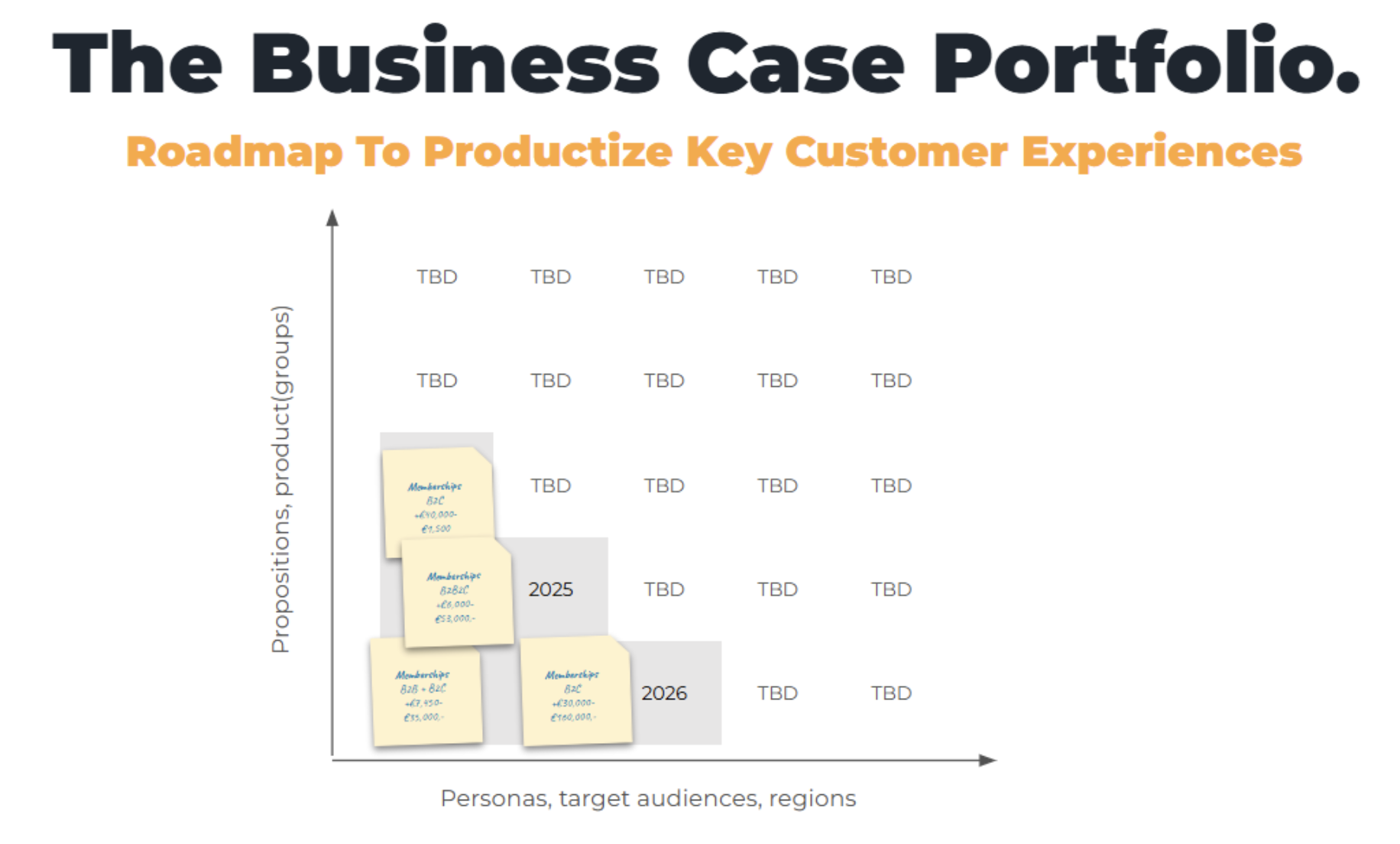
Not one business case. A backlog of them. Every proposition against every persona, each cell a potential investment with its own return. That’s your portfolio.
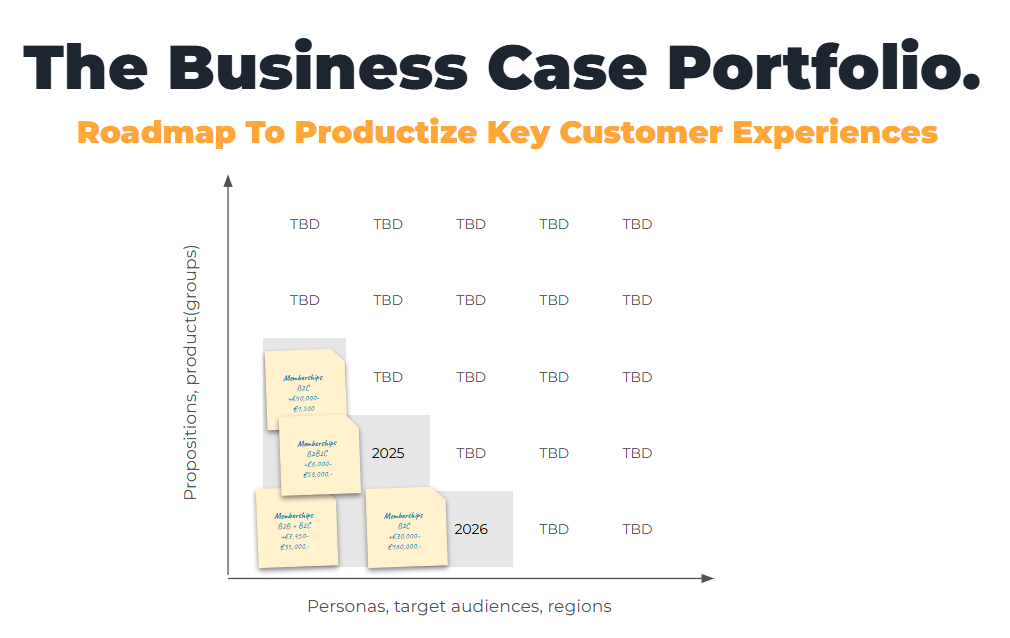
The Business Case Backlog: propositions against personas, each cell a potential investment with its own return. Source: MartechTribe.
The backlog shows something a campaign plan never will. Take a membership organization with four cases side by side. One returns €40,000 on an investment of €1,500. Another costs €160,000 to return €30,000. Both look like reasonable marketing plans. Only one is an investment worth making.
That’s what prioritizing looks like. Not more analysis. A clear view of where the next euro goes, and why.
And it changes the conversation with finance. Completely. You’re no longer defending a budget. You’re presenting a portfolio. Finance can do what it does best: compare, rank, and challenge. Marketing does what it should do: find the opportunities. Both mindsets, finally at the same table.
The marketer of tomorrow isn’t the one who runs the most efficient campaigns. It’s the one who can show where the next euro of return comes from. Do you know?

Related posts
Keep reading for more marketing technology information!

Marketing Is The Company's Edge: Where Value Happens
Value Engineering #2 - Stop Optimizing Campaigns. Optimize Revenue.
How to Put a Missed Opportunity on the Balance Sheet